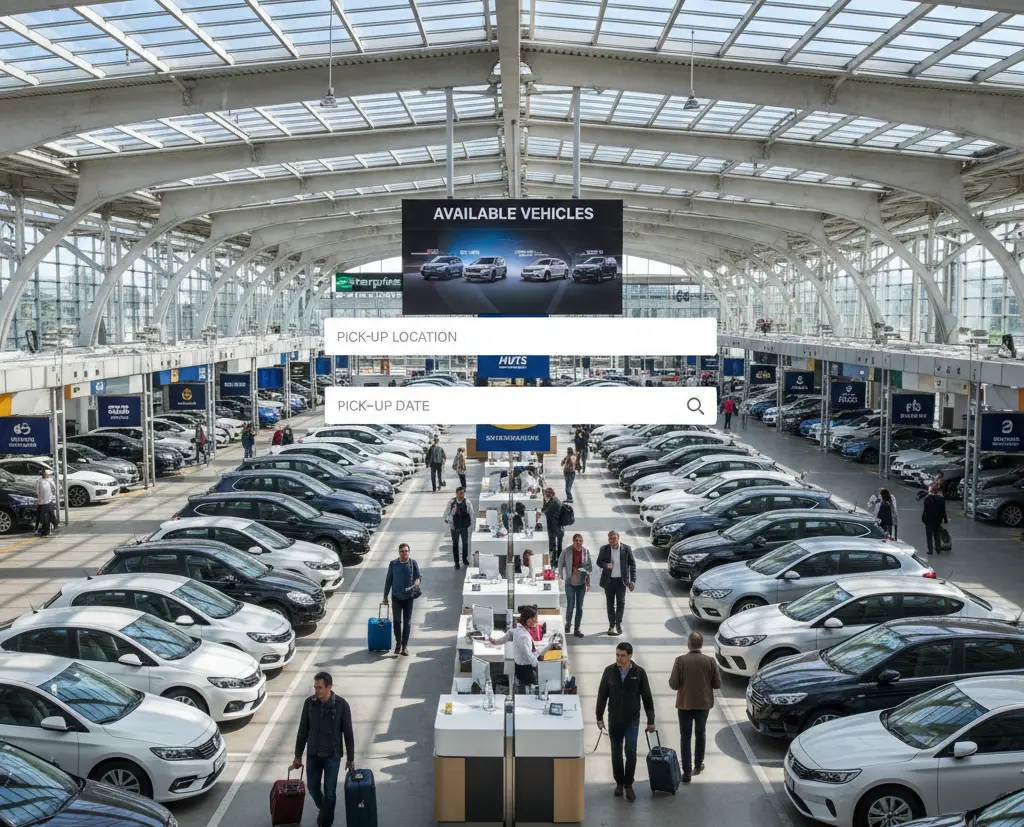
Executive Summary
The European car rental market is entering a structurally transformative phase, shaped by the convergence of electrification, digital mobility ecosystems, and evolving consumer behavior toward flexible transportation access. The market, valued at approximately US$28.5 billion in 2024, is projected to reach US$41.2 billion by 2030, expanding at a compound annual growth rate of 6.3 percent. This growth trajectory reflects a normalization following the sharp post-pandemic rebound observed between 2021 and 2023, transitioning into a more stable, innovation-led expansion cycle.
A critical inflection point in the market has been the acceleration of electrification strategies by major players such as Europcar Mobility Group and Sixt SE, both of which are actively repositioning their fleets to align with stringent European Union decarbonization targets. Concurrently, digital-native booking ecosystems and app-based interfaces are reshaping customer acquisition and retention strategies, with platform penetration expected to exceed 75 percent by the end of the decade.
Market Overview
Market Definition and Scope
The European car rental market comprises short-term, long-term, and corporate leasing of four-wheeler vehicles across leisure and business use cases. It includes traditional station-based rentals as well as emerging models such as car sharing and subscription mobility. The scope spans all major vehicle categories and fuel types across Western, Southern, Northern, and Eastern Europe, with varying maturity levels. The market is increasingly positioned as part of a broader mobility ecosystem rather than a standalone transportation service.
Evolution of the European Car Rental Ecosystem
The market has evolved from an airport-centric, asset-heavy model to a digitally integrated mobility ecosystem. Historically dependent on offline bookings and standardized pricing, the industry now leverages mobile platforms, dynamic pricing, and real-time fleet management. Leading players such as Sixt SE and Europcar Mobility Group have diversified into car sharing, subscriptions, and multimodal integrations, reflecting a shift toward mobility-as-a-service and customer-centric, flexible usage models.
Key Market Drivers
The market is driven by strong tourism demand, increasing preference for access over ownership, and rising corporate outsourcing of fleet operations. Leisure travel continues to dominate, particularly in Southern Europe, while urban consumers are adopting long-term and subscription-based rentals. Corporate demand provides stability through structured contracts. Additionally, digital platforms are accelerating growth by enabling seamless booking, transparent pricing, and improved fleet utilization, fundamentally reshaping customer acquisition and retention strategies.
Macroeconomic and Environmental Impact
Macroeconomic factors such as inflation and fuel price volatility have increased rental costs by approximately eight-12 percent, influencing pricing strategies and demand elasticity. Environmental regulations, including emissions reduction targets, are accelerating the transition toward electric fleets, requiring significant capital investment. While economic cycles impact discretionary travel demand, particularly in leisure segments, the long-term shift toward sustainable and flexible mobility solutions continues to support market resilience and structural growth.
Market Size and Growth Outlook
European Car Rental Market Size
Values shown in US$ billion
European Car Rental Market Size and YoY Growth
| Year | Market Size (US$ B) | YoY Growth (%) |
|---|---|---|
| 2020 | 18.2 | -32.0% |
| 2021 | 21.5 | 18.1% |
| 2022 | 25.3 | 17.7% |
| 2023 | 27.2 | 7.5% |
| 2024 | 28.5 | 4.8% |
| 2027F | 34.9 | 6.9% |
| 2030F | 41.2 | 6.3% |
Growth Analysis
The European car rental market's growth trajectory over the past five years has been characterized by a sharp contraction followed by a robust recovery and subsequent normalization. The decline in 2020, where the market contracted by nearly 32 percent, was primarily driven by mobility restrictions and the collapse of international travel. However, the recovery phase between 2021 and 2023 demonstrated a compounded rebound effect, supported by pent-up travel demand, government stimulus measures, and a surge in domestic tourism.
As the market enters the 2024-2030 period, growth is expected to stabilize at a CAGR of 6.3 percent, reflecting a shift from recovery-led expansion to structurally driven growth. This phase is underpinned by three key forces. First, the steady resurgence of international tourism across Southern and Western Europe continues to generate consistent demand for short-term rentals, particularly in leisure-heavy markets such as Spain, Italy, and France. Second, the increasing adoption of electric vehicles within rental fleets is creating new demand segments, particularly among environmentally conscious travellers and corporate clients with sustainability mandates. Third, the rapid penetration of digital booking platforms is enhancing utilization rates and enabling dynamic pricing strategies, thereby improving revenue optimization.
Importantly, growth is becoming geographically diversified, with Eastern Europe emerging as a high-growth corridor due to rising disposable incomes, improving infrastructure, and relatively low market penetration. This regional expansion is expected to contribute disproportionately to incremental market value over the next decade.
Market Segmentation
By Rental Type
By Rental Type
- Short-term rentals62%
- Long-term rentals23%
- Corporate leasing15%
By Rental Type
| Segment | Description | Share (%) |
|---|---|---|
| Short-term rentals | Bookings ranging from a few hours up to 30 days, mostly concentrated in one-seven day cycles; driven by leisure travelers, airport pickups, and temporary mobility needs | 62% |
| Long-term rentals | Periods exceeding 30 days and extending up to 12 months; flexible alternative to ownership for expatriates, project-based workers, and urban consumers | 23% |
| Corporate leasing | Multi-month to multi-year agreements with corporate clients including fleet management, maintenance, insurance, and replacement vehicles | 15% |
Rental type segmentation in the European car rental market is primarily defined based on the duration of vehicle usage and contractual structure. Short-term rentals typically refer to bookings ranging from a few hours up to 30 days, with the majority concentrated in one-seven day usage cycles. These rentals are predominantly driven by leisure travelers, airport pickups, and temporary mobility needs such as weekend travel or short business trips. The dominance of this segment, accounting for 62 percent of the market, is closely tied to Europe's strong tourism ecosystem and high frequency of cross-border travel.
Long-term rentals, in contrast, generally span periods exceeding 30 days and can extend up to 12 months. These arrangements are often structured as flexible alternatives to ownership or leasing, particularly for expatriates, project-based workers, and urban consumers seeking subscription-like mobility solutions without long-term financial commitments. The growth of this segment is being supported by rising urbanization and a shift toward "usership" models.
Corporate leasing represents a more structured and contract-driven segment, typically involving multi-month to multi-year agreements between rental companies and corporate clients. These contracts often include fleet management services, maintenance, insurance, and replacement vehicles, making them attractive for organizations seeking to outsource non-core operations. The distinction between long-term rentals and corporate leasing lies primarily in contractual complexity and client type, with the latter being more formalized and service-intensive.
By Vehicle Type
By Vehicle Type
By Vehicle Type
| Segment | Description | Share (%) |
|---|---|---|
| Economy & Compact | Small hatchbacks and sedans with engine capacities under 1.6 liters; low rental cost, high fuel efficiency, preferred by budget-conscious travelers and urban driving | 48% |
| SUVs & Crossovers | Larger body size, higher ground clearance, and enhanced cargo capacity; cater to families, group travelers, and longer journeys | 22% |
| Luxury & Premium | High-end sedans, executive cars, and performance models with advanced features; driven by corporate clients, HNIs, and premium tourism | 12% |
| Vans & MUVs | Larger passenger capacity (typically six or more) and cargo space; used for group travel, logistics support, and airport transfers | 10% |
| Electric Vehicles (EVs) | Battery electric vehicles and plug-in hybrids with zero or low tailpipe emissions; growth driven by regulatory mandates and sustainability preferences | 8% |
Vehicle segmentation is based on a combination of price tier, vehicle size, performance characteristics, and intended usage. Economy and compact cars, which account for 48 percent of the market, typically include small hatchbacks and sedans such as entry-level models with engine capacities under 1.6 liters. These vehicles are characterized by low rental costs, high fuel efficiency, and ease of maneuverability, making them the preferred choice for budget-conscious travelers and urban driving conditions.
SUVs and crossovers, representing 22 percent of the market, are defined by their larger body size, higher ground clearance, and enhanced cargo capacity. These vehicles cater to families, group travelers, and customers seeking comfort and versatility for longer journeys or rural travel. Their growing popularity reflects a broader consumer shift toward utility-oriented vehicles.
Luxury and premium vehicles, comprising 12 percent of the market, include high-end sedans, executive cars, and performance-oriented models from premium automotive brands. This segment is defined not only by higher price points but also by superior features such as advanced infotainment systems, enhanced comfort, and brand prestige. Demand in this category is largely driven by corporate clients, high-net-worth individuals, and premium tourism experiences.
Vans and multi-utility vehicles (MUVs) are categorized based on their passenger capacity and cargo space, typically accommodating six or more passengers. These vehicles are widely used for group travel, logistics support, and airport transfers.
Electric vehicles, currently accounting for eight percent of the market, cut across multiple vehicle classes but are categorized separately due to their distinct powertrain technology. This segment includes battery electric vehicles (BEVs) and, in some cases, plug-in hybrids, and is defined by zero or low tailpipe emissions. The rapid growth of this category is being driven by regulatory mandates and sustainability-focused consumer preferences.
By Booking Mode
By Booking Mode
- Online68%
- Offline32%
By Booking Mode
| Segment | Description | Share (%) |
|---|---|---|
| Online | Reservations made through company websites, mobile applications, and third-party aggregator platforms; enables dynamic pricing, real-time inventory, and personalized offers | 68% |
| Offline | Bookings conducted through physical rental counters at airports, train stations, or city locations; relevant for last-minute bookings and specific demographic groups | 32% |
Booking mode segmentation is determined by the channel through which the customer initiates and completes the rental transaction. Online bookings include reservations made through company websites, mobile applications, and third-party aggregator platforms. This segment, accounting for 68 percent of the market, has seen rapid growth due to increasing smartphone penetration, improved digital infrastructure, and consumer preference for convenience and price transparency. Online platforms also enable dynamic pricing, real-time inventory visibility, and personalized offers, significantly enhancing customer experience.
Offline bookings, which represent 32 percent of the market, are typically conducted through physical rental counters at airports, train stations, or city locations. While this channel remains relevant for last-minute bookings and certain demographic groups, its relative importance is declining as digital adoption accelerates. The distinction between the two segments is based purely on the point of transaction initiation, even though backend processes may be digitally integrated in both cases.
By End User
By End User
- Leisure / Tourism64%
- Corporate / Business36%
By End User
| Segment | Description | Share (%) |
|---|---|---|
| Leisure / Tourism | Individual travelers, families, and tourists renting vehicles for personal use, sightseeing, and holiday travel; highly seasonal and tied to tourism flows | 64% |
| Corporate / Business | Business travelers and organizations renting vehicles for operational or employee mobility needs; higher booking frequency and longer durations | 36% |
End-user segmentation is defined by the primary purpose of vehicle usage and customer profile. The leisure segment, which accounts for 64 percent of the market, includes individual travelers, families, and tourists renting vehicles for personal use, sightseeing, and holiday travel. This segment is highly seasonal and closely correlated with tourism flows, particularly in Southern Europe.
The corporate segment, comprising 36 percent of the market, includes business travelers and organizations renting vehicles for operational or employee mobility needs. This segment is typically characterized by higher booking frequency, longer rental durations, and greater emphasis on service reliability and contractual agreements. The distinction between the two segments is based on usage intent rather than booking channel or duration, although corporate rentals often overlap with long-term or leasing arrangements.
By Service Model
By Service Model
- Traditional Car Rental70%
- Car Sharing20%
- Subscription-Based Services10%
By Service Model
| Segment | Description | Share (%) |
|---|---|---|
| Traditional Car Rental | Station-based pick-up and drop-off at airports or city branches; fixed rental durations and centralized fleet management | 70% |
| Car Sharing | Station-based and free-floating models offering on-demand access often measured in hours; app-based and urban focused | 20% |
| Subscription-Based Services | Fixed monthly fee covering insurance, maintenance, and vehicle switching; positioned as alternative to ownership and leasing | 10% |
Service model segmentation is based on the operational structure and access model of vehicle usage. Traditional car rental, which dominates with a 70 percent share, involves station-based pick-up and drop-off at designated locations such as airports or city branches. This model is characterized by fixed rental durations and centralized fleet management.
Car sharing, accounting for 20 percent of the market, includes both station-based and free-floating models where users can access vehicles on-demand, often for short durations measured in hours. This segment is defined by its high degree of flexibility, app-based access, and urban focus, making it particularly popular in densely populated cities.
Subscription-based services, representing 10 percent of the market, offer users access to vehicles for a fixed monthly fee that typically includes insurance, maintenance, and the option to switch vehicles. This model is positioned as an alternative to ownership and leasing, targeting consumers seeking flexibility without long-term commitments. The segmentation criteria here are primarily based on usage flexibility, duration structure, and service bundling.
By Fuel Type
By Fuel Type
- Internal Combustion Engine (ICE)72%
- Hybrid Vehicles15%
- Battery Electric Vehicles (BEVs)13%
By Fuel Type
| Segment | Description | Share (%) |
|---|---|---|
| Internal Combustion Engine (ICE) | Petrol and diesel-powered cars; remain dominant due to widespread availability and established infrastructure | 72% |
| Hybrid Vehicles | Combine internal combustion engines with electric motors to improve fuel efficiency and reduce emissions; transitional technology | 15% |
| Battery Electric Vehicles (BEVs) | Fully electric vehicles with zero tailpipe emissions; reliant on charging infrastructure and growing rapidly under regulatory support | 13% |
Fuel type segmentation is determined by the vehicle's propulsion technology and emissions profile. Internal combustion engine vehicles, which still account for 72 percent of the market, include petrol and diesel-powered cars and remain dominant due to their widespread availability and established infrastructure.
Hybrid vehicles, representing 15 percent of the market, combine internal combustion engines with electric motors to improve fuel efficiency and reduce emissions. These vehicles serve as a transitional technology, particularly in regions where full EV infrastructure is still developing.
Battery electric vehicles, comprising 13 percent of the market, are fully electric and produce zero tailpipe emissions. This segment is defined by its reliance on charging infrastructure and is experiencing rapid growth due to regulatory support and increasing consumer awareness. The segmentation reflects a broader industry transition toward sustainable mobility, with the share of ICE vehicles expected to decline steadily over the next decade.
Trends and Developments
Electrification of Rental Fleets
Electrification is emerging as a defining trend in the European car rental market, driven by regulatory mandates and shifting consumer preferences toward sustainable mobility. Rental companies are increasingly integrating battery electric vehicles into their fleets to comply with EU emission targets and access government incentives. Players such as Hertz Global Holdings are making large-scale EV investments, while others are forming partnerships with OEMs and charging providers. EV fleet penetration is expected to reach approximately 25 percent by 2030, supported by improving infrastructure and corporate ESG commitments.
Digitalization and Platform Economy
Digital transformation is fundamentally reshaping the competitive landscape, with online channels now accounting for a majority of bookings. Rental companies are investing in mobile applications, AI-driven pricing engines, and data analytics to enhance customer experience and optimize fleet utilization. Platforms enable real-time availability, dynamic pricing, and contactless rentals, which have become standard customer expectations. Companies such as Sixt SE are leveraging digital-first strategies to differentiate through premium user experience, while aggregator platforms are intensifying price transparency and competition.
Changing Travel and Mobility Patterns
Consumer mobility behavior is shifting toward flexibility, convenience, and multimodal integration. The rise of remote work and hybrid travel has altered traditional demand patterns, increasing the need for short-duration and flexible rental options. Urban consumers are increasingly favoring access-based mobility over ownership, driving demand for car sharing and subscription services. Additionally, intra-European travel and road trips are gaining popularity, further supporting rental demand. These evolving patterns are prompting rental companies to diversify service offerings and adapt fleet composition accordingly.
Investment and M&A Activity
The market is witnessing increased investment activity, particularly in digital platforms, EV integration, and mobility startups. Venture capital and private equity firms are backing car-sharing and mobility-as-a-service platforms, reflecting confidence in asset-light business models. At the same time, established players are pursuing strategic partnerships and acquisitions to expand capabilities and geographic reach. OEM-backed platforms such as Free2Move are gaining traction, signaling a convergence between automotive manufacturing and mobility services within the evolving ecosystem.
Regulatory and Sustainability Trends
Regulatory developments across Europe are accelerating the transition toward sustainable mobility, directly influencing fleet composition and operational strategies. Policies such as emission reduction targets, low-emission zones, and incentives for electric vehicles are compelling rental companies to phase out internal combustion engine fleets. Sustainability is also becoming a key differentiator, with corporate clients increasingly prioritizing low-emission mobility solutions. Compliance with environmental regulations is no longer optional but a strategic necessity, shaping long-term investment decisions and competitive positioning across the industry.
Competitive Landscape
Competitive Landscape — Market Share
Competitive Landscape
| Company | Description | Market Share (%) |
|---|---|---|
| Enterprise Holdings | Strong airport presence with extensive network and partnerships with airlines and travel aggregators; estimated revenue of US$5.1 billion | 18% |
| Europcar Mobility Group | European dominance with deep-rooted regional presence and diversified mobility offerings across leisure and corporate; estimated revenue of US$4.0 billion | 14% |
| Hertz Global Holdings | EV strategy focus with aggressive electrification investments and partnerships with EV manufacturers; estimated revenue of US$3.7 billion | 13% |
| Sixt SE | Premium positioning with emphasis on customer experience, digital interfaces, and high-end vehicle offerings; estimated revenue of US$2.9 billion | 10% |
| Others | Fragmented market of regional operators, mobility startups, and OEM-backed platforms; combined estimated revenue of US$12.8 billion | 45% |
The European car rental market exhibits a moderately fragmented competitive structure, with the top four players collectively accounting for approximately 55 percent of total market share. Enterprise Holdings maintains a leadership position, largely due to its extensive airport network and strong partnerships with airlines and travel aggregators. In contrast, Europcar Mobility Group leverages its deep-rooted European presence and diversified mobility offerings to maintain a competitive edge across both leisure and corporate segments.
A notable strategic divergence among key players lies in their approach to electrification and digital transformation. Hertz Global Holdings has adopted an aggressive EV-first strategy, aiming to differentiate itself through sustainability positioning and partnerships with EV manufacturers. Meanwhile, Sixt SE has focused on premiumization and customer experience, investing heavily in digital interfaces and high-end vehicle offerings to target affluent travellers.
The competitive intensity is further heightened by the emergence of mobility startups and OEM-backed platforms such as Free2Move, which are introducing asset-light, technology-driven business models. These entrants are not only intensifying price competition but also redefining service expectations through features such as contactless rentals, flexible pricing, and integrated mobility solutions. As a result, traditional players are increasingly investing in technology, partnerships, and fleet modernization to maintain relevance in an evolving market landscape.
Challenges and Opportunities
Key Challenges
Escalating Fleet Acquisition and Financing Costs
One of the most critical structural challenges facing the European car rental market is the sustained increase in fleet acquisition costs, which have risen by approximately 15-20 percent since 2021. This escalation is primarily attributable to supply chain disruptions, semiconductor shortages, and inflationary pressures across the automotive manufacturing ecosystem. For rental companies, fleet procurement represents the largest capital expenditure component, and higher vehicle prices directly compress return on assets and extend payback periods. Additionally, rising interest rates across Europe have increased the cost of financing these fleets, further straining balance sheets, particularly for smaller and mid-sized operators. This dynamic is forcing companies to optimize fleet utilization more aggressively and reconsider asset-heavy business models.
Infrastructure Gaps for Electric Vehicles
While electrification is a key growth driver, the uneven availability of charging infrastructure across Europe presents a significant operational bottleneck. Western European countries have made considerable progress in deploying public charging networks; however, large parts of Eastern and Southern Europe remain underpenetrated. This disparity creates logistical challenges for rental companies operating cross-border fleets, as vehicle usability becomes dependent on regional infrastructure readiness. Moreover, the lack of standardized charging systems and varying payment mechanisms adds complexity to fleet management and customer experience. As a result, rental companies must carefully balance EV adoption with infrastructure maturity, often leading to region-specific fleet strategies.
Demand Seasonality and Utilization Inefficiencies
The European car rental market remains highly seasonal, with demand peaking during summer months and major holiday periods. This seasonality is particularly pronounced in tourism-driven markets such as Spain, Italy, and Greece, where fleet utilization rates can vary significantly between peak and off-peak seasons. During low-demand periods, underutilized vehicles generate limited revenue while still incurring depreciation, maintenance, and storage costs. This imbalance negatively impacts overall profitability and asset efficiency. Although dynamic pricing and fleet reallocation strategies can partially mitigate these effects, achieving optimal year-round utilization remains a persistent challenge for operators.
Regulatory Fragmentation Across European Markets
Operating across multiple European countries exposes rental companies to a complex and fragmented regulatory landscape. Differences in taxation policies, emission standards, insurance requirements, and urban mobility restrictions create significant compliance burdens. For example, the implementation of low-emission zones in major cities varies widely in terms of scope and enforcement, requiring companies to maintain region-specific fleet compositions. This fragmentation increases administrative complexity and limits the scalability of standardized operating models, particularly for pan-European players such as Europcar Mobility Group.
Key Opportunities
Accelerated Electrification and Green Mobility Transition
The transition toward electric mobility represents one of the most significant long-term opportunities in the European car rental market. With EV rental demand expected to grow at a CAGR of 20-25 percent through 2030, companies that proactively invest in electrified fleets stand to gain both regulatory and competitive advantages. Electrification not only aligns with EU decarbonization targets but also enables rental providers to tap into premium customer segments willing to pay higher prices for sustainable mobility options. Furthermore, partnerships with automotive manufacturers and charging infrastructure providers can create integrated ecosystems that enhance customer convenience and operational efficiency.
Digital Transformation and Data-Driven Optimization
The rapid adoption of digital technologies is fundamentally reshaping the car rental value chain, creating opportunities for enhanced efficiency and customer engagement. Online booking platforms, mobile applications, and AI-driven pricing algorithms are enabling companies to optimize fleet utilization, forecast demand more accurately, and deliver personalized customer experiences. Advanced data analytics can also support predictive maintenance, reducing downtime and extending vehicle lifecycles. Companies such as Sixt SE have demonstrated how digital-first strategies can drive differentiation, particularly in premium segments where customer experience is a key decision factor.
Expansion in Underpenetrated Eastern European Markets
Eastern Europe presents a compelling growth opportunity due to its relatively low market penetration and improving economic fundamentals. Rising disposable incomes, increasing urbanization, and expanding tourism infrastructure are driving demand for flexible mobility solutions in countries such as Poland, Hungary, and Romania. Compared to Western Europe, where the market is more mature and competitive, Eastern Europe offers higher growth potential and lower entry barriers. Rental companies that establish an early presence in these markets can benefit from first-mover advantages and build strong brand recognition.
Integration into Mobility-as-a-Service Ecosystems
The evolution of mobility-as-a-service (MaaS) platforms is creating new avenues for growth by integrating car rentals into broader transportation ecosystems. Consumers are increasingly seeking seamless, multimodal travel experiences that combine public transport, ride-hailing, and rental services within a single platform. By partnering with airlines, rail operators, and urban mobility providers, car rental companies can expand their customer base and enhance service accessibility. OEM-backed platforms such as Free2Move are already leveraging this model to create integrated mobility solutions, signaling a shift toward more collaborative and ecosystem-driven business models.
Policy and Regulatory Environment
EU Fit for 55 Package
The European car rental market operates within a highly regulated environment, shaped by a combination of EU-level directives and country-specific policies. One of the most significant regulatory frameworks influencing the market is the European Union's "Fit for 55" package, which aims to reduce greenhouse gas emissions by 55 percent by 2030. This policy has direct implications for rental companies, as it accelerates the transition toward low-emission and zero-emission vehicle fleets.
EU 2035 ICE Vehicle Sales Ban
In addition, the EU's proposed ban on the sale of new internal combustion engine vehicles by 2035 is expected to fundamentally reshape fleet procurement strategies. Rental companies are increasingly required to align their fleet composition with these long-term regulatory goals, necessitating substantial investments in electric and hybrid vehicles.
National EV Incentives and Subsidies
At the national level, governments across Europe are implementing a range of incentives and subsidies to promote electric mobility. For instance, Germany offers subsidies of up to approximately US$7,500 per electric vehicle, while France provides tax incentives and grants to support fleet electrification. These policies not only reduce the cost burden for rental companies but also accelerate the adoption of EVs within the market.
Cross-Border Compliance and Low-Emission Zones
However, the regulatory landscape also presents challenges, particularly in terms of compliance and standardization. Differences in emission standards, taxation regimes, and urban mobility policies across countries create complexity for operators managing cross-border fleets. Additionally, the introduction of low-emission zones in major cities restricts access for traditional vehicles, further necessitating the transition toward cleaner fleets.
Future Outlook and Analyst Recommendations
The European car rental market is expected to evolve into a highly digitized, sustainability-driven ecosystem by 2030, with a projected market size of US$41.2 billion. Growth will be driven by the convergence of electrification, digital transformation, and expanding tourism flows, supported by favorable regulatory frameworks.
From a strategic perspective, rental companies must prioritize fleet electrification, invest in digital capabilities, and expand into high-growth regions such as Eastern Europe. Insights from organizations such as the European Travel Commission and advisory firms like McKinsey & Company suggest that the future of the market will be defined by integrated mobility solutions, where car rentals are seamlessly embedded within broader transportation ecosystems.
Companies that can effectively navigate regulatory complexities, optimize fleet utilization through technology, and align their offerings with evolving consumer expectations will be best positioned to capture long-term value in this dynamic market.
Contact
Email: sales@aloraadvisory.com
Phone: +353 87 457 1343 | +91 704 542 4192
Frequently Asked Questions
What is the current size of the European car rental market?
The market is valued at approximately US$28.5 billion in 2024.
What is the expected growth rate?
The market is expected to grow at a CAGR of 6.3 percent from 2024 to 2030.
Which segment dominates the market?
Short-term rentals and economy vehicles dominate due to strong tourism demand.
What are the key growth drivers?
Tourism recovery, EV adoption, and digital platform penetration.
What are the major challenges?
High fleet costs, infrastructure gaps for EVs, and regulatory complexity across countries.
About Us
Alora Advisory is a market research and strategic advisory firm that helps organizations make confident, evidence led decisions in uncertain environments. It combines rigorous research with strategic interpretation to deliver decision ready market intelligence across growth, competition, and investment priorities.